ServicesSolar Panel Repair
Solar Panel Repair in Millcreek
When your panels start producing less, we find out why before we replace anything. We test each panel, wire run and the inverter, show you the readings and photos, and tell you plainly what your home needs to get its output back. No part gets swapped on a guess.
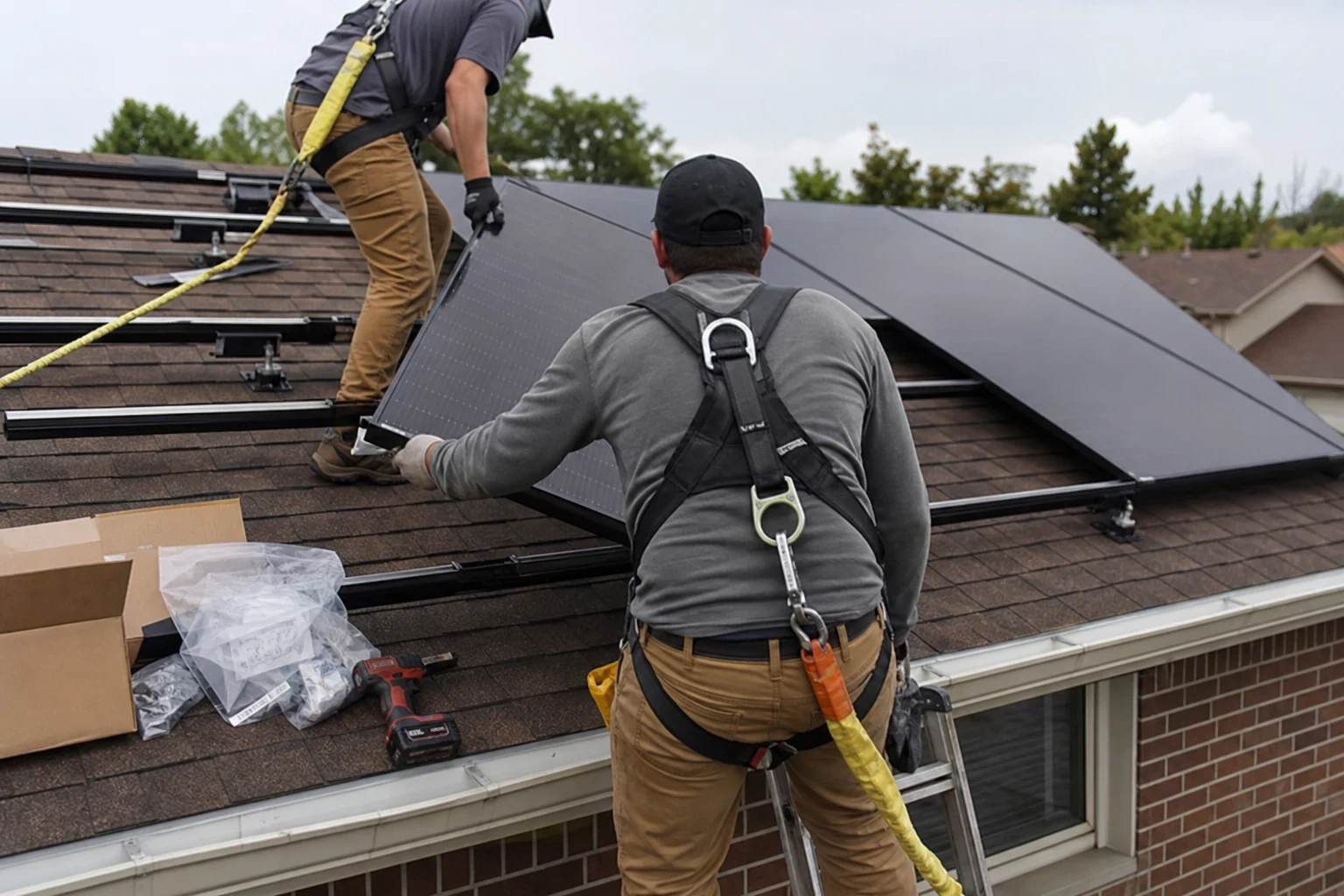
Find the cause first, then fix it
Most solar problems show up as a number. Your monitoring app reads lower than last year, or your power bill starts creeping back up. Panels rarely fail all at once. More often it is a loose connector, a tripped breaker, a worn-out inverter or a string of panels that has gone quiet.
We start with an inspection, not a parts list. We check each part of the system, take photos and readings, and walk you through what is working and what is not. Then you decide. Sometimes the fix is one connector. Sometimes a panel or inverter is near the end of its life, and we will tell you that too.
We are licensed in all states served. Repair work sits right next to our solar panel installation and battery storage jobs, so we know how these systems are put together.
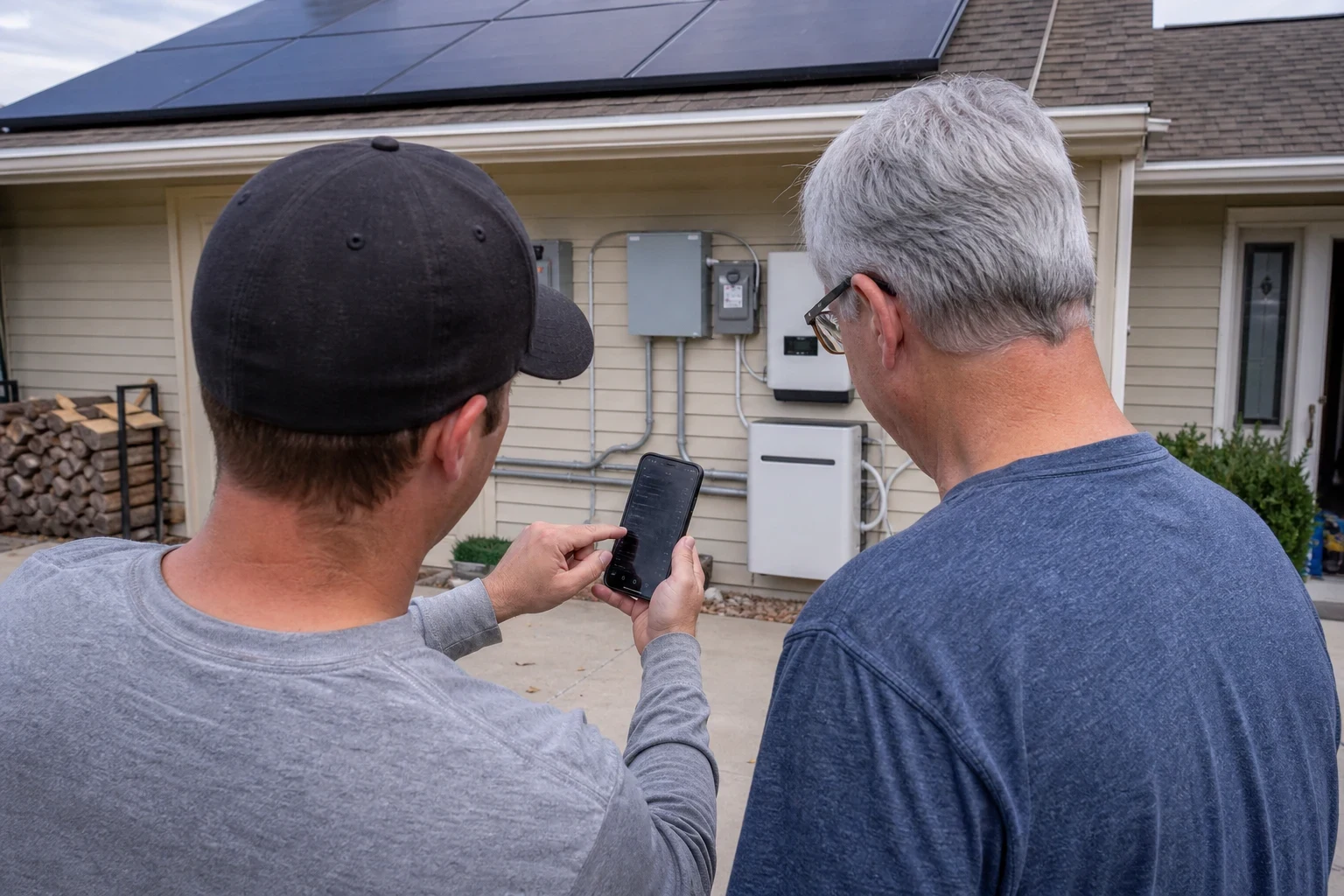
What a repair visit covers
- 01
System health check
We read the inverter, pull your monitoring history and line it up against what the system was built to produce. That points us to where the trouble likely is.
- 02
Panel and string testing
We measure voltage and current one string at a time to catch panels dragging the others down. We also look for cracked glass, hot spots, browning and peeling back sheets.
- 03
Wiring and connectors
Years of summer heat and winter cold loosen connectors and crack wire jackets. Animals chew insulation too. We follow each run, replace damaged sections and snug up anything that has worked loose.
- 04
Inverters and optimizers
The inverter is usually the first part to wear out. We pull fault codes, reset or replace units, and swap out failed microinverters or optimizers.
- 05
Mounts and clamps
We check that every panel is held tight and that the clamps and bolts are still doing their job.
- 06
A record of the job
Once we finish, we hand over the pictures we took and a short note listing each fix. Keep it with your system paperwork for later.
Questions about Solar Panel Repair?
Call(801) 877-3072Signs your system needs a look
Output dropped and stayed down
A cloudy week is normal. A drop that lasts through clear, sunny days usually means a part has failed.
Error light or blank inverter screen
A red light, a fault code or a dark screen means the inverter has stopped converting power, or is about to.
A panel looks damaged
Look for cracked glass, burn marks or bubbling on the back. Spring hail and heavy winter snow can crack a panel without breaking it apart.
Monitoring went quiet
If your app stopped reporting, it may be a simple communication fault. It may also be a system that shut itself off.
Your bill is climbing again
If usage at your home has not changed but the bill has, the panels are probably producing less.
A breaker keeps tripping
Do not keep resetting it. Leave it off and have the system checked, because a tripping breaker can point to a wiring fault.
How a repair job goes
- 1
First, a quick conversation
Pick up the phone and describe what the app or inverter is doing. We can set up a free virtual appointment and go over your monitoring data and inverter screen together. Now and then the problem gets sorted out right on that call.
- 2
Inspection at your home
We come out, power the system down safely and check it part by part. Anything we find goes on camera.
- 3
Plain findings and a written quote
We go over the photos and readings with you and explain what broke and why. The quote lists each item on its own line. No work happens until you approve it.
- 4
The repair
We arrive with the parts, make the fix and test the whole system before we pack up. Old parts and scraps leave with us.
- 5
Confirm the numbers
We point out what healthy output looks like in your app. Over the next few sunny days you can check for yourself that the fix is holding.
What affects the cost of a repair
Repair cost depends on what failed and how hard it is to reach. We do not give you a number until we know the cause. After the inspection you get a written quote by line, so you can see what each part and each hour is for.
- Which part failed
- Tightening a connector is a small job. Replacing a central inverter is a bigger one. Most of the price comes down to this.
- Access to the panels
- Height, spacing and layout matter. Reaching a panel in the middle of an array can mean lifting the ones around it first.
- Parts for older systems
- Some panel and inverter models are no longer made. Finding a compatible match can take more time and cost more than a current part.
- Warranty coverage
- A failed part may still be covered by its maker, and we check before we quote. Every solar and battery product we install carries a 25-year warranty.
- How many problems we find
- One bad connector is quick. Several issues across different strings take longer to fix and test.
Solar panel repair questions
Can you fix a system another company installed?
Usually, yes. We check it the same careful way we would check one of our own. If a part is proprietary or out of production, we say so before any work starts and walk you through the options.
Should I repair my older system or replace it?
That comes down to what the inspection turns up. When the panels test healthy and a single part has failed, repair is almost always the better call. When several panels have lost output and the inverter is worn too, we put both paths side by side with the numbers, and the choice is yours.
Is it safe to keep running my system if something looks wrong?
Burn marks, a hot smell or a breaker that keeps tripping are reasons to shut the system off at the disconnect and leave it off. A drop in output by itself is rarely a safety problem. It still deserves a look, since you are losing power you already paid for.
How long does a repair take?
A lot of fixes wrap up the same visit we diagnose them. When a panel or inverter has to be ordered, we finish testing, place the order and schedule a return trip for the install once the part shows up.
Will a repair affect my existing warranty?
Before we work on anything still under coverage, we read through your warranty paperwork. If the maker wants a claim filed first, we explain each step so your coverage stays intact.
Get a straight answer on your system
Tell us what your panels or inverter are doing. We will help you figure out the next step and set up an inspection if it needs one.